How Might AI Change the Workplace? Evidence from Corporate Executives (Policy Hub: Macroblog)
Federal Reserve Bank of Atlanta's How Might AI Change the Workplace? Evidence from Corporate Executives (Policy Hub: Macroblog) (March 2026; n=748, fielded Nov 11 – Dec 16, 2025 (main); supplemental Dec 2025 – Jan 2026) found that ~60% of responding firms invested in AI in 2025 (about 80% of large firms).
Key findings
- 01More than 80% of firms expect to invest in AI in 2026; about 30% of large firms expect to spend over $1 million.
- 02Firms reported negligible AI-driven employment changes in 2025; expected 2026 effects are near zero overall, about -0.8% at large firms.
- 03Firms reported roughly 1.8% productivity gains in 2025, though revenue-based measures showed substantially smaller effects.
By the numbers
~60%of responding firms invested in AI in 2025 (about 80% of large firms)
1.8%average reported increase in output per worker from AI in 2025
0.8%employment reduction large firms expect in 2026 as a result of AI; the all-firm average is close to zero
What it means for you Draft
For executives at $10–100M companies
Finance leaders are spending on AI mainly for productivity, not to cut staff, and the measured payoff so far is modest. That is a useful reality check for a mid-sized firm setting expectations with its board. A few percent of productivity, earned steadily, is a reasonable goal.
Limitations
High trust.Established executive panel, transparent method and authors; modest n and self-reported gains. Publishers do not sell AI.
The headline figure measures the “Approved” stage of adoption (sanctioned in a function).Why adoption numbers disagree
Federal Reserve Bank of Atlanta. "How Might AI Change the Workplace? Evidence from Corporate Executives (Policy Hub: Macroblog)." March 25, 2026. https://www.atlantafed.org/research-and-data/publications/policy-hub-macroblog/2026/03/25/how-might-ai-change-the-workplace-evidence-from-corporate-executives
Related reports
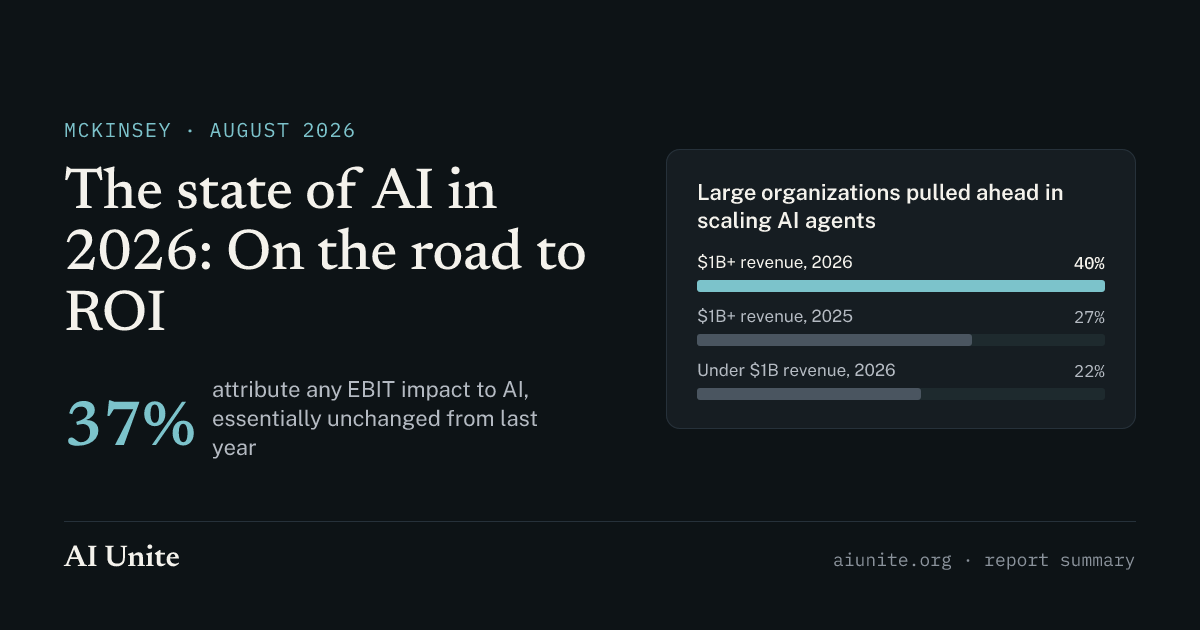 The state of AI in 2026: On the road to ROI80% say AI improved their individual productivity, yet only about 6% are AI high performers, flat since 2025.
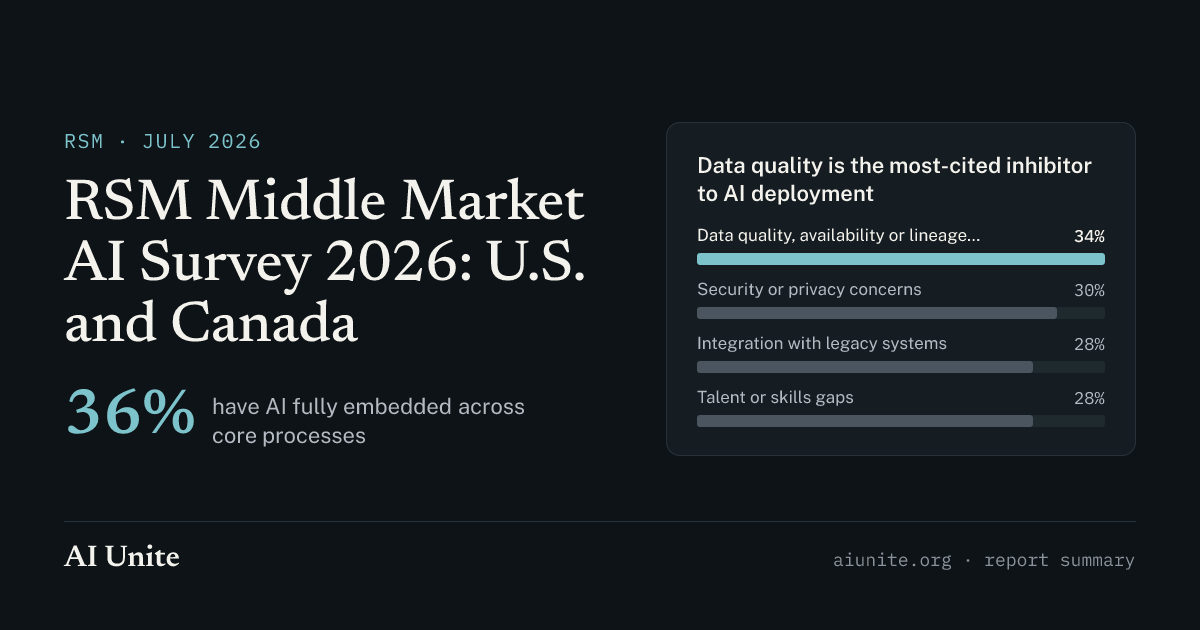 RSM Middle Market AI Survey 2026: U.S. and Canada86% have partially or fully integrated AI into operations, and 97% say they are satisfied with the business value AI delivers.
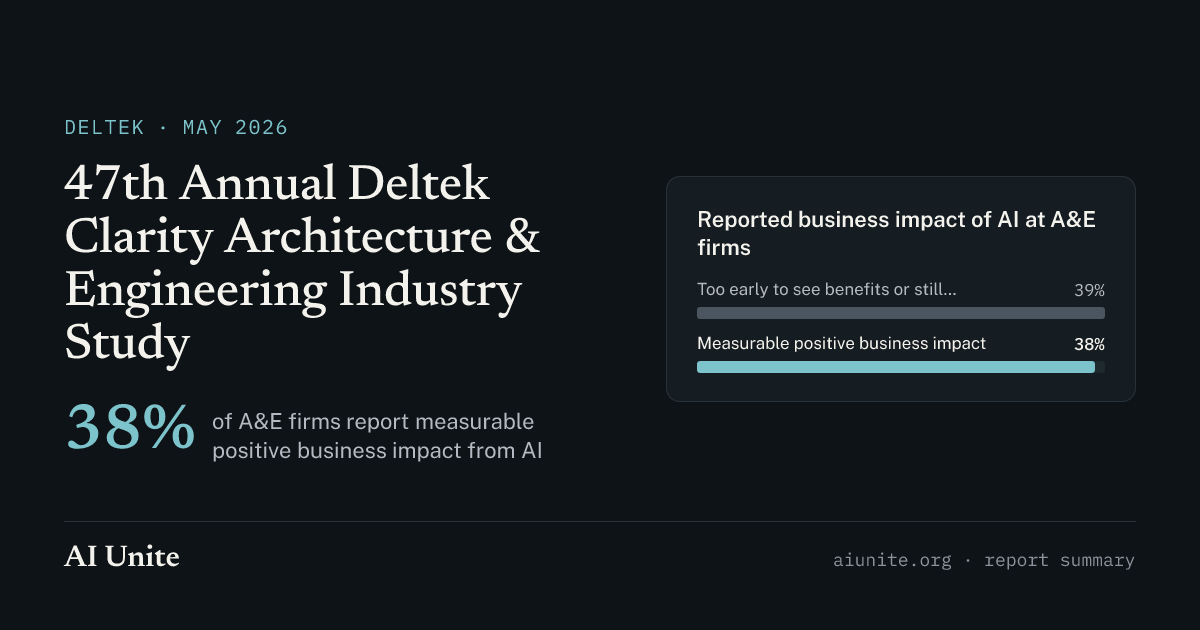 47th Annual Deltek Clarity Architecture & Engineering Industry StudyAI adoption among A&E firms rose from 53% to 70% year over year; generative AI use rose from 64% to 78%.