Tracking the Impact of AI on the Labor Market
The Budget Lab at Yale's Tracking the Impact of AI on the Labor Market (July 2026, updated September 2026; CPS microdata through August 2026, government statistics) found no clear evidence of labor market disruption associated with AI, with occupational churn, AI exposure among the unemployed, and usage measures flat, within historical ranges, or on pre-AI trends.
Key findings
- 01As of the September 15, 2026 update using August 2026 CPS data, the tracker finds no clear evidence of labor market disruption associated with AI.Occupational churn, AI exposure among the unemployed, and usage data remain flat, within historical ranges, or on pre-AI trends. (p. 2)
- 02Measures of AI usage show no connection to changes in employment or unemployment.A synthetic differences-in-differences analysis of AI exposure also does not yet clearly show an AI-related footprint. (p. 1)
- 03In the October 2025 baseline analysis, the occupational mix since November 2022 was on a path only about 1 percentage point above the pace seen with the internet from 1996.By 2002 the job mix was at most about 7 percentage points different from 1996. The Lab says the faster recent pace began in 2021, before generative AI. (pp. 3–4 (Oct 2025 analysis))
- 04Unemployed workers came from occupations where about 25 to 35 percent of tasks could be performed by generative AI, with no clear upward trend.There was no clear difference by length of unemployment, which the Lab would expect if AI were displacing workers. (p. 11 (Oct 2025 analysis))
By the numbers
Aug 2026latest CPS month in the tracker, still showing no clear AI disruption
~1 ptgap between post-ChatGPT and early-internet pace of job-mix change
25–35%share of tasks exposed to generative AI in jobs of the unemployed
What it means for you Draft
For executives at $10–100M companies
Economy-wide, AI has not yet reshuffled jobs faster than past technology waves. For a $10–100M company, that suggests the labor impact you feel will come from your own choices about roles and hiring, not from a broad labor market shift. It pairs well with the Stanford and Harvard studies, which find effects concentrated on young workers.
For practitioners
Aggregate data can hide effects in narrow groups like entry-level hires, so do not read 'no disruption' as 'no change in your function'. The tracker updates monthly and is a reasonable free reference when someone claims AI is already cutting jobs broadly.
Limitations
High trust.Nonpartisan university group using public federal data with published methods and downloadable data; does not sell AI.
Aggregate survey measures can miss effects concentrated in specific ages or firms. The CPS sample is too small for fine occupational detail, and exposure and usage metrics are imperfect proxies. The tracker's own page gives few point estimates; numeric detail comes from the October 2025 companion analysis.
The Budget Lab at Yale. "Tracking the Impact of AI on the Labor Market." July 16, 2026. https://budgetlab.yale.edu/research/tracking-impact-ai-labor-market
Related reports
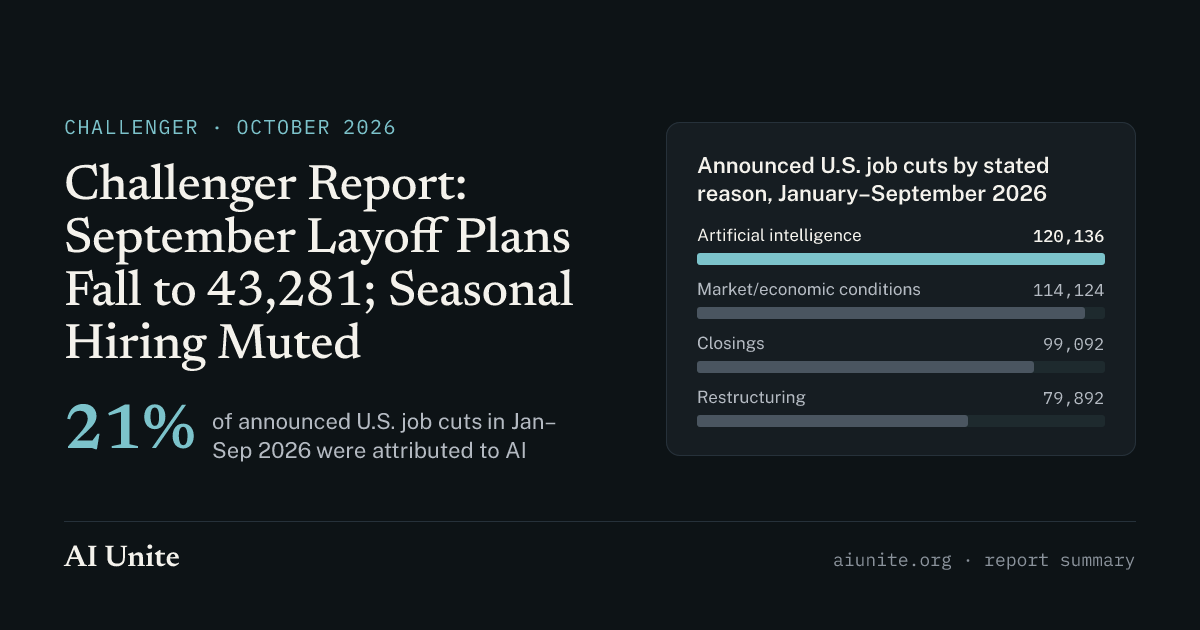 Challenger Report: September Layoff Plans Fall to 43,281; Seasonal Hiring MutedAI remains the most-cited reason for announced U.S. layoffs in 2026, though September cuts tied to AI were 3,961, about 9% of the month's total.
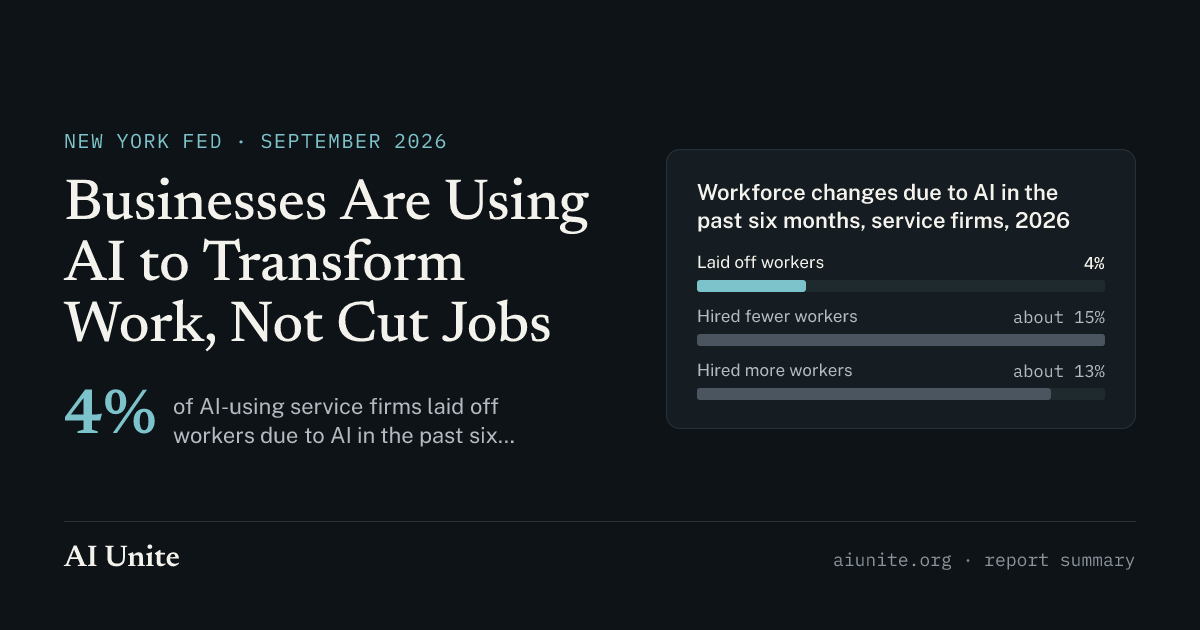 Businesses Are Using AI to Transform Work, Not Cut JobsAI use among regional firms jumped again in 2026, but layoffs stayed rare; retraining remains the main workforce response.
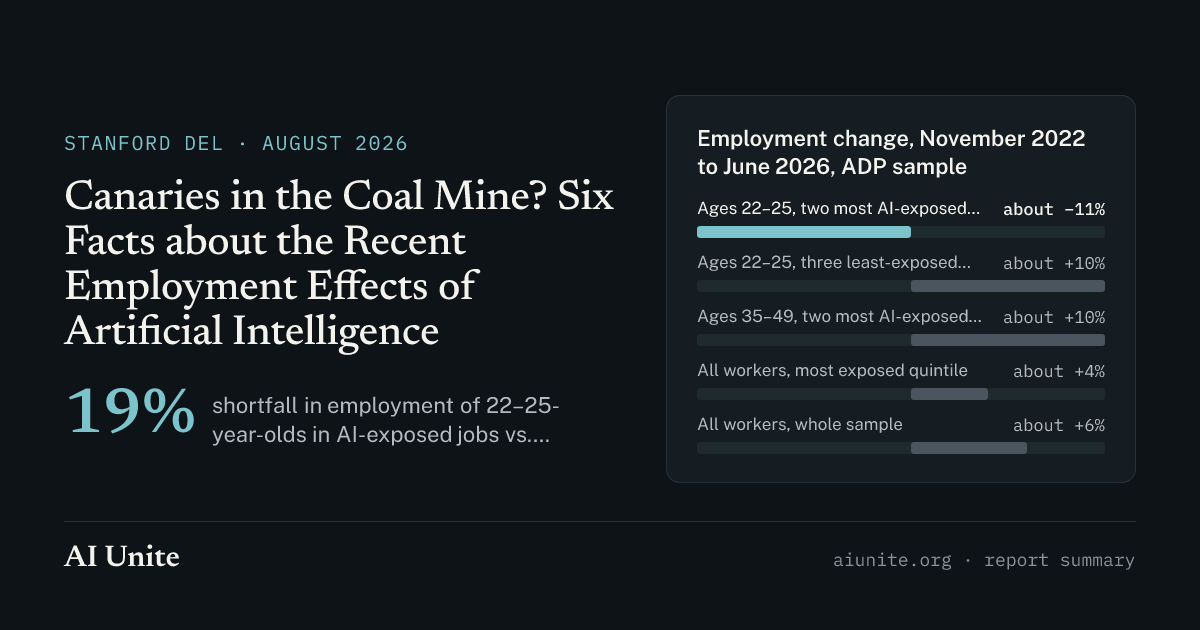 Canaries in the Coal Mine? Six Facts about the Recent Employment Effects of Artificial IntelligenceADP payroll data show young workers in AI-exposed jobs falling behind since late 2022, mostly through less hiring, while older workers are unaffected.