Measuring the Impact of Early-2025 AI on Experienced Open-Source Developer Productivity
METR's Measuring the Impact of Early-2025 AI on Experienced Open-Source Developer Productivity (July 2025; n=16 developers, 246 tasks, randomized controlled trial) found that developers took 19% longer to finish tasks when AI tools were allowed.
Key findings
- 01Developers took 19% longer to complete issues when AI tools were allowed.Each of 246 real issues was randomly assigned to allow or disallow AI; tools were mainly Cursor Pro with Claude 3.5/3.7 Sonnet.
- 02Before the study, developers expected AI to speed them up by 24%.The measured result ran in the opposite direction from what participants predicted.
- 03After experiencing the slowdown, developers still believed AI had sped them up by 20%.Self-reported productivity gains were not a reliable guide to measured effects in this setting.
- 04The 19% slowdown had a confidence interval of +2% to +39%.METR reported this interval in its February 2026 follow-up note; the study had just enough statistical power to rule out zero effect.
- 05Tasks averaged about two hours each, in repositories averaging 22k+ GitHub stars and 1M+ lines of code.Developers were paid $150 an hour and self-reported implementation time while recording their screens.
By the numbers
19%slower with AI allowed (measured)
24%speedup developers expected beforehand
20%speedup developers believed afterward
What it means for you Draft
For executives at $10–100M companies
This is one of the few randomized tests of AI on real work, and it found experienced people got slower, while feeling faster. For a $10–100M company, it is a caution against judging AI tools by how staff say they feel; try to measure time or output on the same kind of work with and without the tool. It is also an early-2025 snapshot, and tools have changed since.
For practitioners
Experts working in code they know deeply may get less from AI than newcomers or people on unfamiliar tasks. If you pilot a tool, randomize or at least compare matched tasks rather than relying on self-reported time savings.
Limitations
High trust.Pre-specified randomized trial with methods and paper published; small sample; METR is a nonprofit that does not sell AI tools.
Only 16 developers, all highly experienced and working in large, mature open-source repositories they knew well; results may not carry to other developers, codebases, or newer tools. Time was self-reported, though screen recordings were collected.
METR (Model Evaluation & Threat Research). "Measuring the Impact of Early-2025 AI on Experienced Open-Source Developer Productivity." July 10, 2025. https://metr.org/blog/2025-07-10-early-2025-ai-experienced-os-dev-study/
Related reports
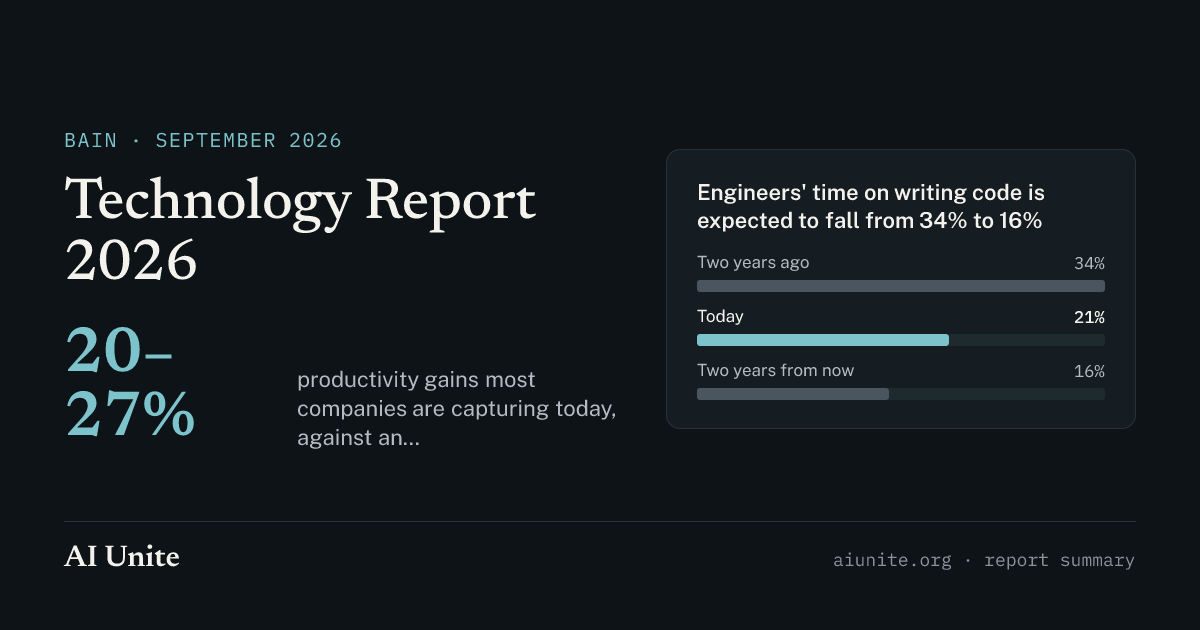 Technology Report 2026Leaders expect a 95% developer productivity uplift in 1–2 years; current gains are 20–27%. Bain says AI moves bottlenecks into review and coordination.
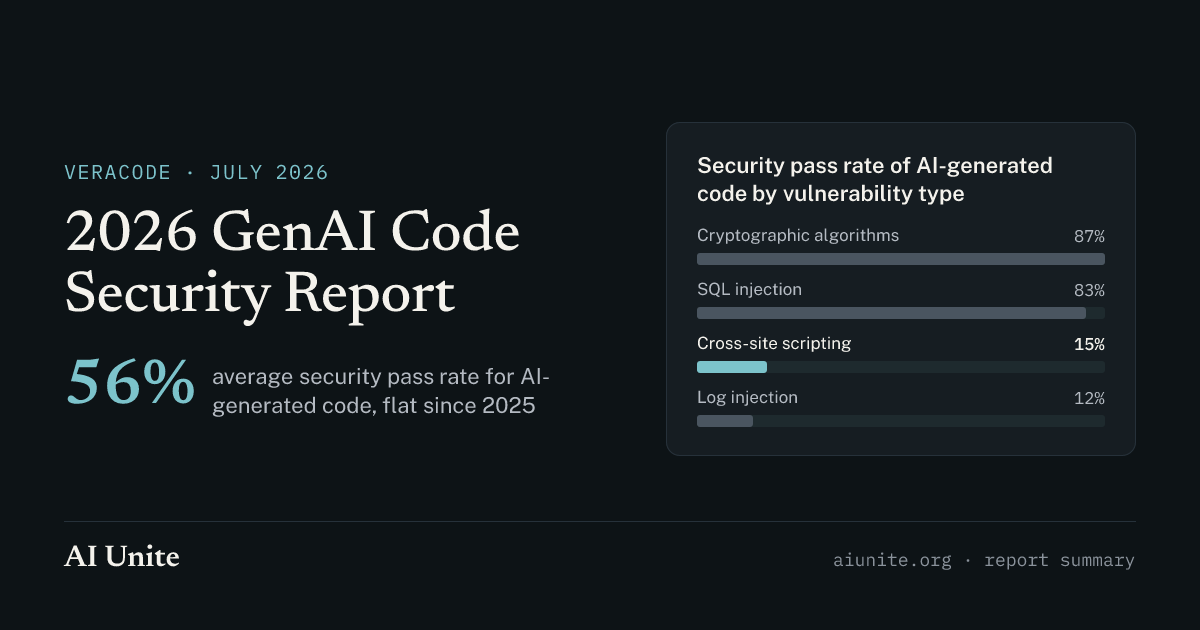 2026 GenAI Code Security ReportAI models now write syntactically correct code nearly always, but about 44% of generated code still carried a known vulnerability.
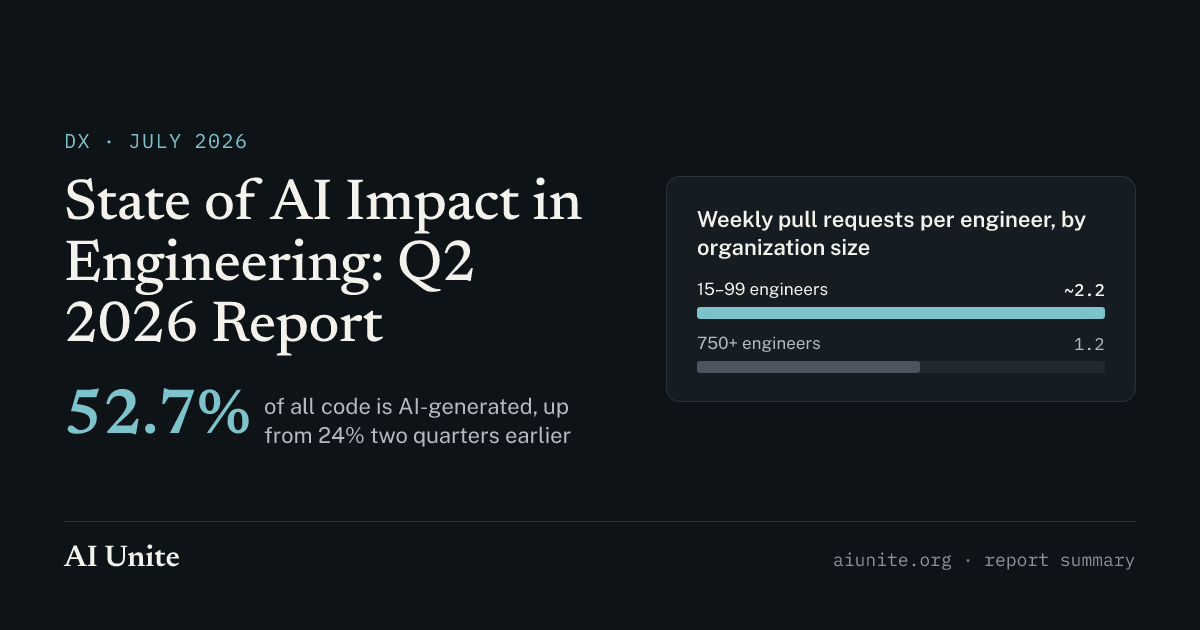 State of AI Impact in Engineering: Q2 2026 ReportAI now writes 52.7% of code and AI spend rose ~28x in tech, but time on new features stayed flat and change confidence fell 6.1%.