Generative AI as Seniority-Biased Technological Change: Evidence from U.S. Résumé and Job Posting Data
Harvard researchers' Generative AI as Seniority-Biased Technological Change (August 2025, revised October 2025; 62 million workers at 285,000 firms, labor data) found that junior employment at firms adopting generative AI fell about 9% relative to non-adopters within six quarters, while senior employment kept rising.
Key findings
- 01Junior employment at adopting firms fell about 9% relative to non-adopters six quarters after early 2023.Senior employment at the same firms showed no break in trend. (p. 4)
- 02A stricter triple-difference comparison of juniors versus seniors within firms shows roughly a 10% relative drop after six quarters.This design absorbs firm-specific and industry-by-seniority shocks. (p. 4)
- 03In an event study around each firm's adoption date, junior employment began falling about three quarters after adoption and was down 8% after eight quarters.There were no significant differences in the eight quarters before adoption. (p. 4)
- 0410,599 firms, about 3.7% of the sample, adopted GenAI by March 2025, but they account for 17.3% of employment.Adoption is identified from job postings for 'GenAI integrator' roles, so quiet employee use of AI tools is not counted. (p. 3)
- 05The junior decline is driven mainly by a substantial reduction in hiring, not by more separations or fewer promotions.It is concentrated in occupations most exposed to GenAI; low-exposure roles show no significant change. (pp. 4–5)
By the numbers
~9%relative decline in junior employment after six quarters
62Mworkers in the résumé dataset
17.3%of employment is at firms classified as GenAI adopters
What it means for you Draft
For executives at $10–100M companies
Firms that formally invested in generative AI appear to have slowed junior hiring first, well before any layoffs. For a $10–100M company, that is worth watching in your own hiring plans, because a thin junior bench becomes a succession problem later. The authors note firms may be hiring less in anticipation of automation, which may or may not prove right.
For practitioners
If you manage hiring in exposed functions, separate 'we don't need this role' from 'we assumed AI would cover it'. Keep some entry-level pipeline intentionally, and document what juniors now do differently with AI.
Limitations
Medium trust.Very large linked dataset and careful designs, but unreviewed working paper with a proxy adoption measure; authors do not sell AI.
Working paper, not peer reviewed. Adopters are larger, more tech-intensive and more educated than non-adopters, and the adoption proxy misses informal AI use. The authors say their data cannot test why firms cut junior hiring.
Harvard University. "Generative AI as Seniority-Biased Technological Change: Evidence from U.S. Résumé and Job Posting Data." August 31, 2025. https://papers.ssrn.com/sol3/papers.cfm?abstract_id=5425555
Related reports
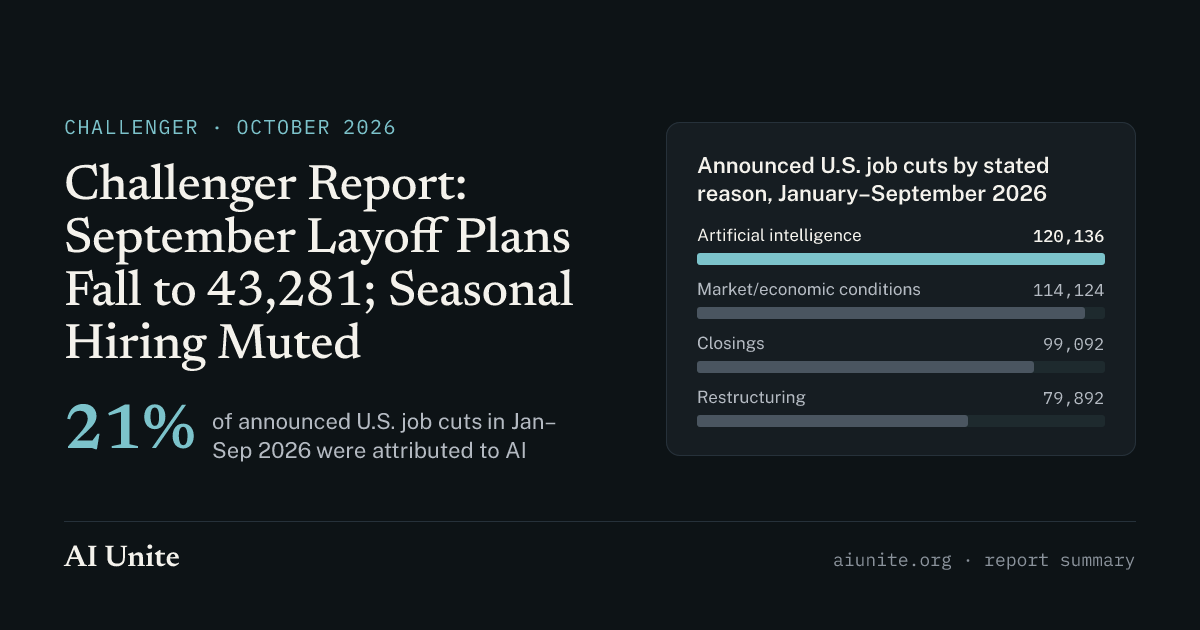 Challenger Report: September Layoff Plans Fall to 43,281; Seasonal Hiring MutedAI remains the most-cited reason for announced U.S. layoffs in 2026, though September cuts tied to AI were 3,961, about 9% of the month's total.
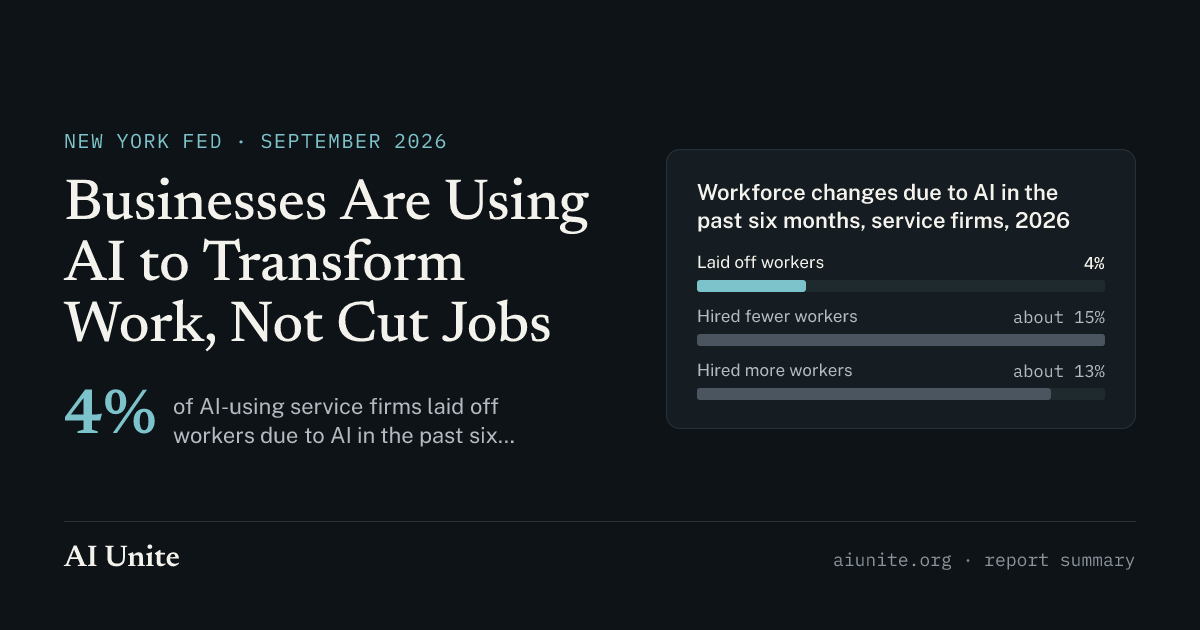 Businesses Are Using AI to Transform Work, Not Cut JobsAI use among regional firms jumped again in 2026, but layoffs stayed rare; retraining remains the main workforce response.
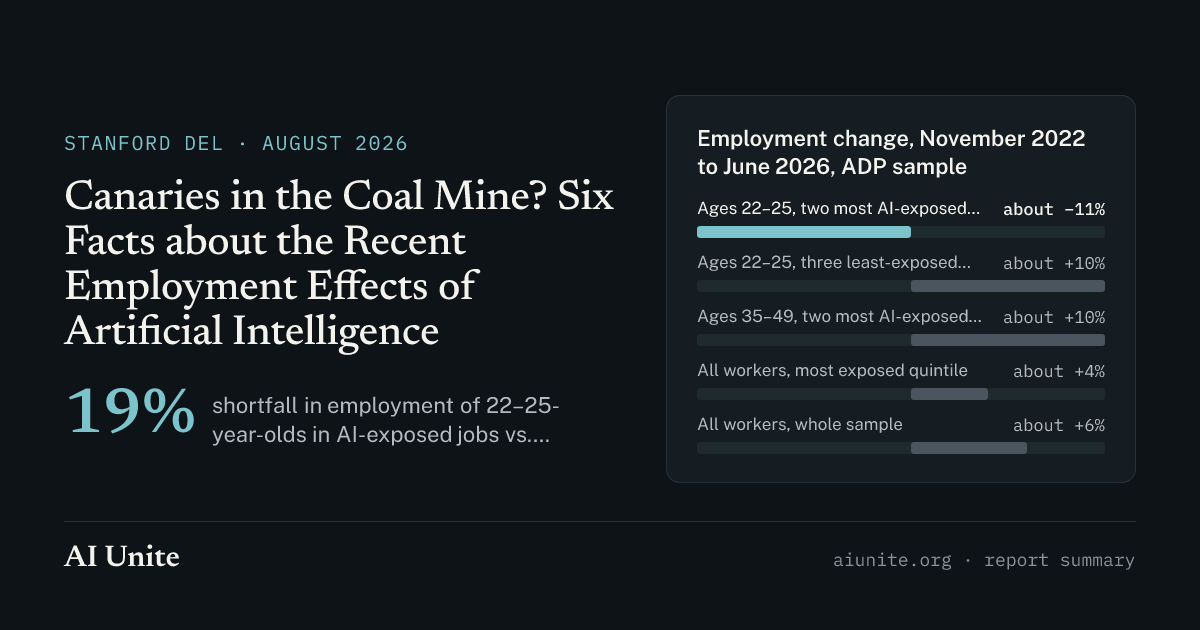 Canaries in the Coal Mine? Six Facts about the Recent Employment Effects of Artificial IntelligenceADP payroll data show young workers in AI-exposed jobs falling behind since late 2022, mostly through less hiring, while older workers are unaffected.