A New Look at AI's Impact on Jobs: Firm-Level AI Spending and Workforce Adjustment
Ramp Economics Lab's A New Look at AI's Impact on Jobs (June 2026; more than 21,000 US firms, spending and workforce data) found that firms in the top third of AI spend per employee grew headcount 10.2% and entry-level headcount 12% over the two years after adoption, while low-intensity adopters showed no significant change.
10.2%
12%
Key findings
- 01High-intensity AI adopters grew headcount 10.2% over the two years after adoption.High intensity means the top third of AI spend per employee per month in the first three months, which was about $30 per employee per month.
- 02Entry-level headcount at high-intensity adopters grew 12% over the same period.Their workforce share of entry-level workers rose 1.15 percentage points compared with the control group.
- 03Low-intensity adopters saw no statistically significant change in headcount.Ramp says gains appear only above a minimum threshold of adoption.
- 04Headcount did not rise until 6–12 months after adoption.Ramp describes this as a learning curve, with gains compounding afterward.
- 05Adopters were already larger, more engineering-intensive, more likely to be venture-backed, and faster-growing before adoption.The authors caution the results are correlations and too early to judge long-run effects.
By the numbers
12%entry-level headcount growth at high-intensity adopters
~$30per employee per month: threshold spend for the top third
6–12 monthslag before headcount rose after adoption
What it means for you Draft
For executives at $10–100M companies
This is one of the few studies that measures actual AI spending rather than asking about it, and it finds serious spenders grew headcount. For a $10–100M company, the notable detail is that the 'serious' threshold was about $30 per employee per month, and gains took 6–12 months to show. It does not show that AI spending causes growth; faster-growing firms may simply buy more AI.
For practitioners
If a pilot has not paid off in its first quarter, this data suggests that is common rather than conclusive. Tracking AI spend per employee over time is a simple internal benchmark to compare against.
Limitations
Medium trust.Large observed-spend dataset linked to workforce records; Ramp sells spend-management software, not AI, and its customer base is not representative.
Ramp customers skew toward younger, venture-backed and tech-oriented firms, so results may not generalize. Adoption is inferred from card and bill-pay spend, missing AI bought other ways. Results are correlational and cover only early adoption.
About the publisher: Sells corporate cards and spend-management software, including AI features; the index is built from its own customers' transactions.
Ramp. "A New Look at AI's Impact on Jobs: Firm-Level AI Spending and Workforce Adjustment." June 30, 2026. https://ramp.com/data/heavy-ai-adopters-hire-more
Related reports
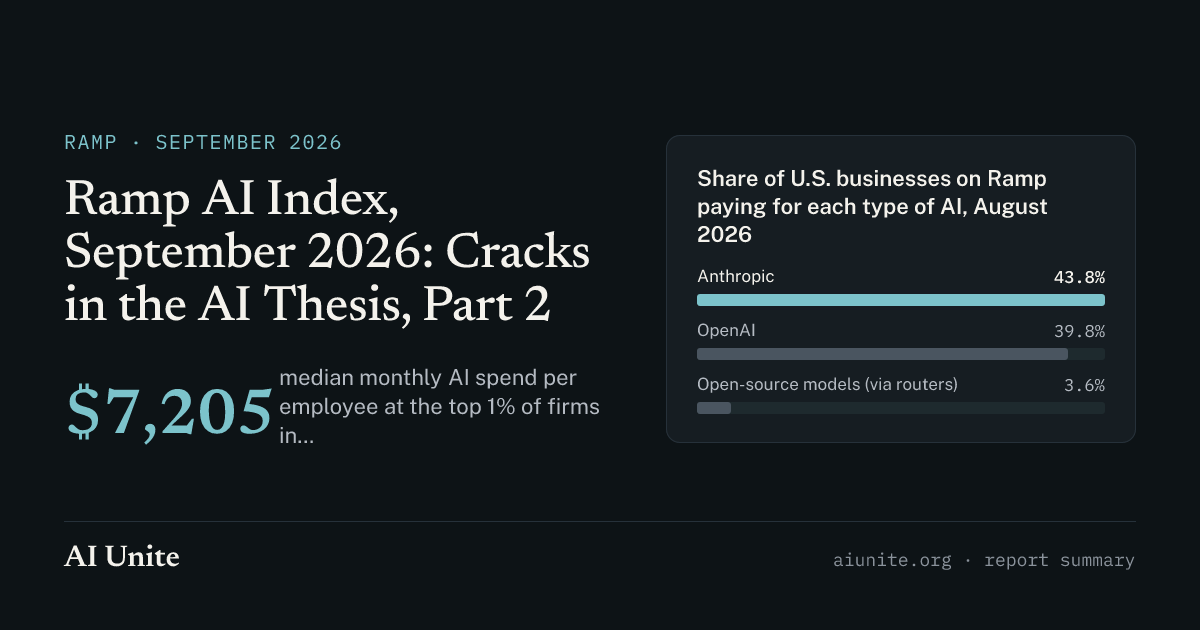 Ramp AI Index, September 2026: Cracks in the AI Thesis, Part 2Business AI adoption keeps rising but more slowly; heavy spenders cut per-employee AI spend as token prices fell 41% from their 2026 peak.
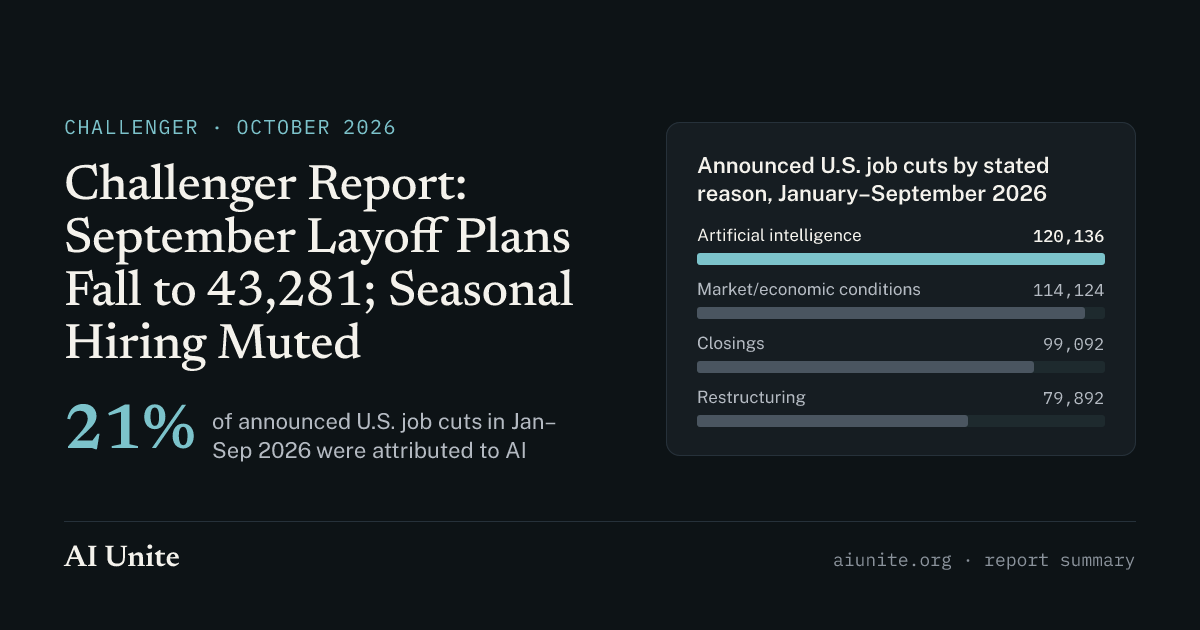 Challenger Report: September Layoff Plans Fall to 43,281; Seasonal Hiring MutedAI remains the most-cited reason for announced U.S. layoffs in 2026, though September cuts tied to AI were 3,961, about 9% of the month's total.
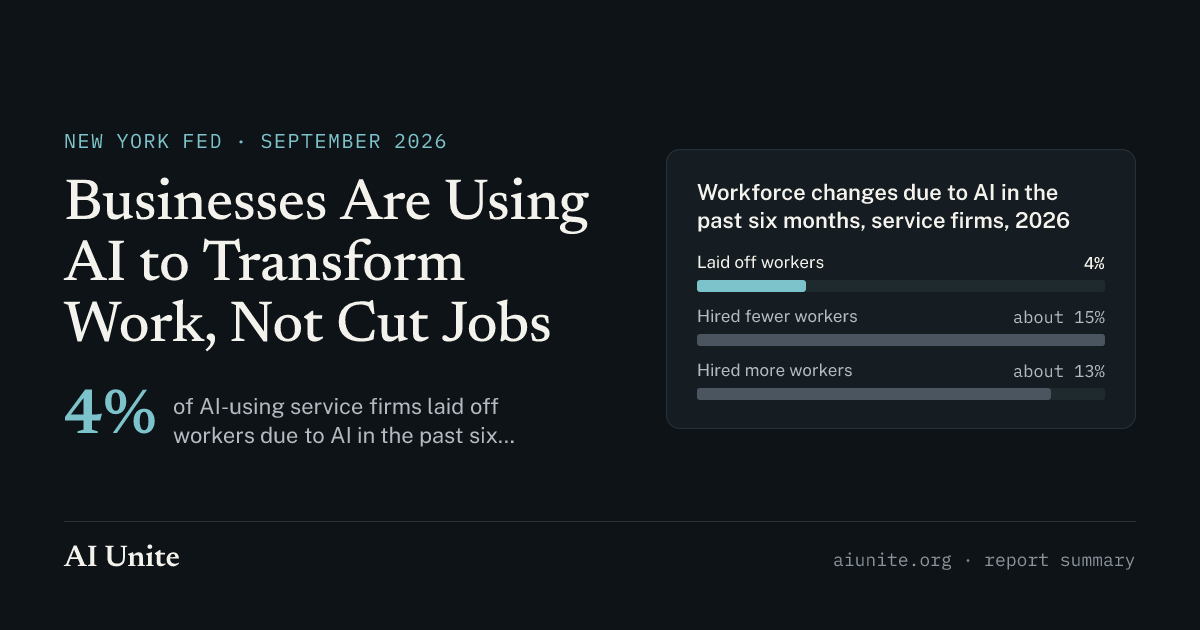 Businesses Are Using AI to Transform Work, Not Cut JobsAI use among regional firms jumped again in 2026, but layoffs stayed rare; retraining remains the main workforce response.